

Articles
Why Are We Afraid of Losing Our Jobs?
Superintelligence, Liberation Humanism, and the chance to stop living for work
Paal Kristian Levang · 7 min read · Nov 2026
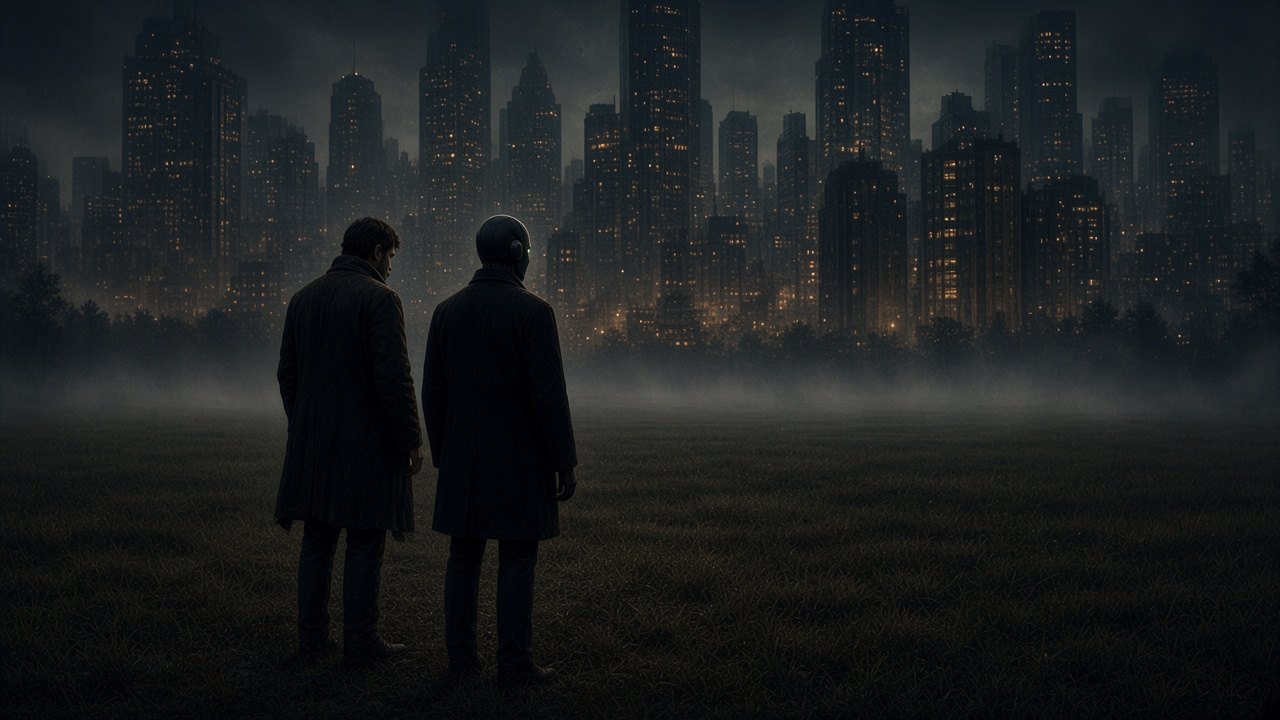
We keep hearing the same warning: robots and AI are coming for our jobs. The picture is always grim—mass unemployment, human obsolescence, the end of the world as we know it.
I say the opposite. Hip, hip, hooray.
What surprises me is not that machines are getting better at the things we currently call work. What surprises me is that we still treat the possibility of not having to work as a threat.
Have we become so thoroughly organized around employment that we can no longer imagine a life that isn’t built around it?
The better question is not “What happens when the machines take our jobs?”
It is: Why should anyone have to work just to earn the right to exist?
Look at the world we have. Extraordinary technology exists alongside persistent poverty, inequality, and the quiet exhaustion of people who spend most of their adult lives earning the money for housing, food, and the rest of ordinary life. In many families both parents work full-time while children grow up in the gaps between shifts. We have become extremely good at arranging existence around the need for a paycheck.
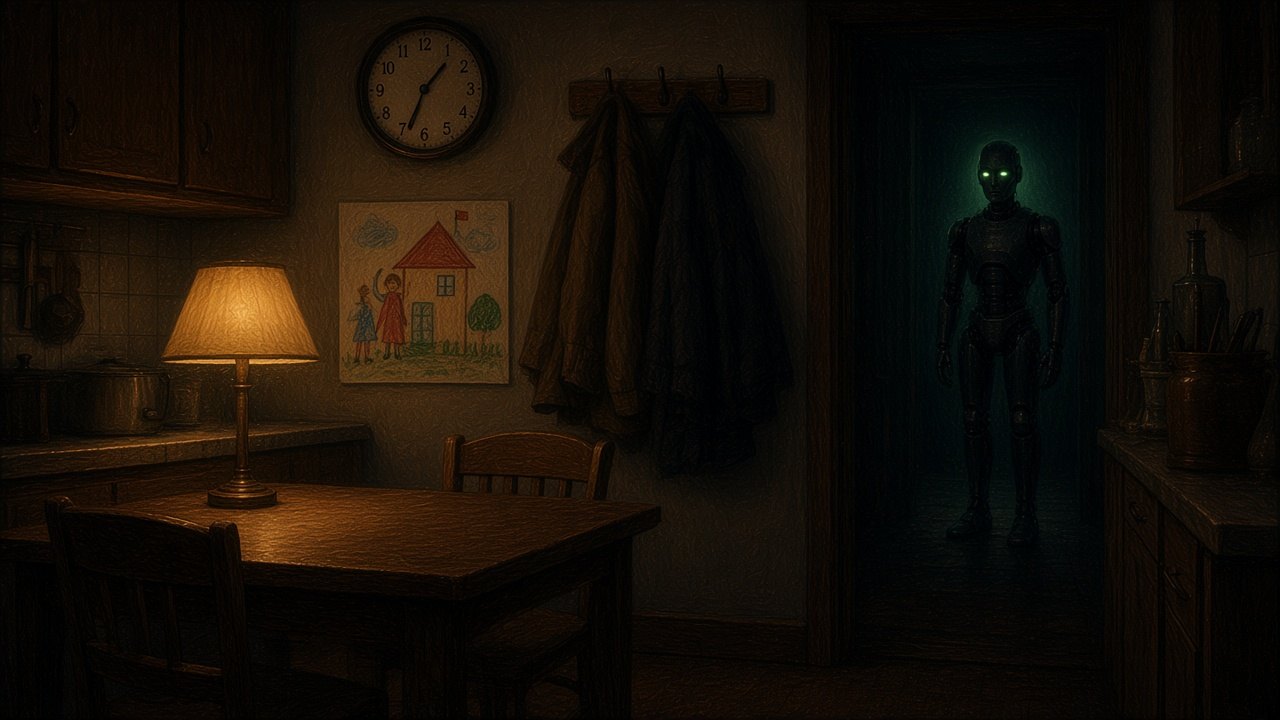
Previous generations were told technology would free them. It has made us more productive. It has not made us free of compulsory labor. We built a civilization in which economic survival, government revenue, and corporate success all depend on people continuing to sell their time. So we keep running. Toward what?
Some people love what they do. Scientists, artists, founders, and others treat their work as an expression of curiosity or purpose rather than a transaction. That is not most people, and it is not the system. Most of us are still forced to put survival ahead of whatever else we might become. Human beings are curious, creative, and capable of more than keeping the lights on. Our institutions treat that capacity as a luxury.
Superintelligence, if it arrives, changes the premise. An intelligence able to coordinate networks of autonomous machines could, in principle, handle food production, construction, logistics, manufacturing, and much of the infrastructure of daily life. We are not there. Energy, materials, maintenance, and physical systems still require human involvement. But the trajectory is clear enough to ask the real question:
What if the machines eventually handled the necessities, and humans were free to decide what to do with their time?
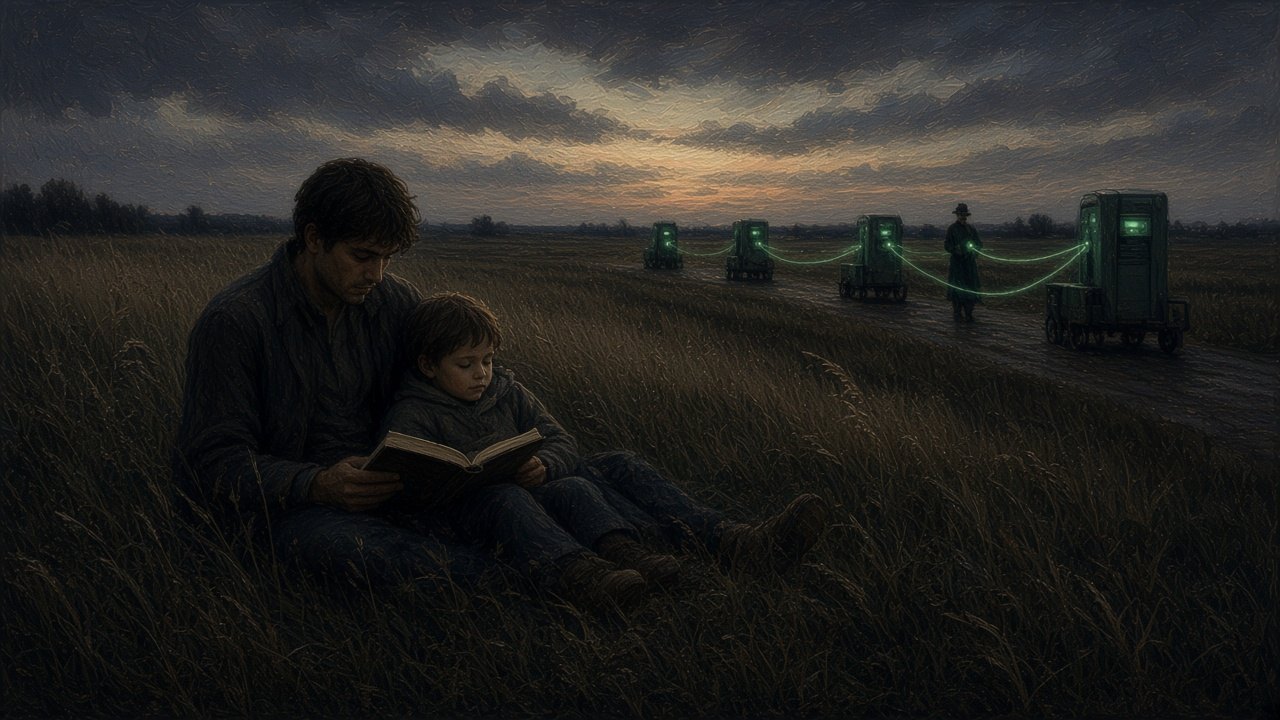
Imagine waking without the background calculation of rent and groceries. Home, food, healthcare, and education are simply available. You could spend the morning with your children, the month learning a craft, the season joining a research expedition, or the year living somewhere simply to understand how other people live. AI agents could act as tutors, research partners, and collaborators. Communities of interest could form across borders without anyone needing an employer’s permission. If you still wanted to build a company or invent something, the tools and knowledge that today belong mostly to large institutions would be more widely available. The point is not idleness. The point is that survival would no longer be the first and last constraint on what a life can be.
Call the underlying idea Liberation Humanism. Its claim is straightforward: every person should have an unconditional claim on the necessities of life, and the freedom to pursue whatever potential they actually have. Survival should not depend on whether someone else is willing to hire you. At the same time, freedom does not mean the end of contribution. People who invent, teach, care for others, or build useful things can still be recognized and rewarded. The difference is that contribution would come from interest and mutual benefit rather than from the threat of destitution.
Superintelligence in this picture is not a ruler and not a servant of a few owners. It is a caretaker: coordinating production, accelerating discovery, and maintaining the systems that keep society running, while humans supply values, curiosity, culture, and direction. In return, humans supply the energy, compute, and governed data the systems need. The relationship is symbiotic, or it is not worth building.
The hard part is ownership. Today, when automation raises productivity, the gains flow to whoever already owns the machines. If autonomous systems eventually perform most economically valuable work, ownership of those systems becomes the main determinant of wealth. A world in which a handful of corporations own nearly all productive robots is not liberation; it is a new form of dependence.
One alternative is to let individuals and communities own shares of the autonomous economy directly. A household might hold stakes in agricultural robots, transport systems, or manufacturing capacity. The machines generate revenue; part is reinvested, part supports the owners. Public or collectively owned infrastructure could cover essential services for those who start with nothing. The principle is simple: the benefits of automation should not be locked in by whoever happened to own the first wave of machines. This does not abolish scarcity or guarantee every robot turns a profit. It does make survival progressively less dependent on selling human labor.
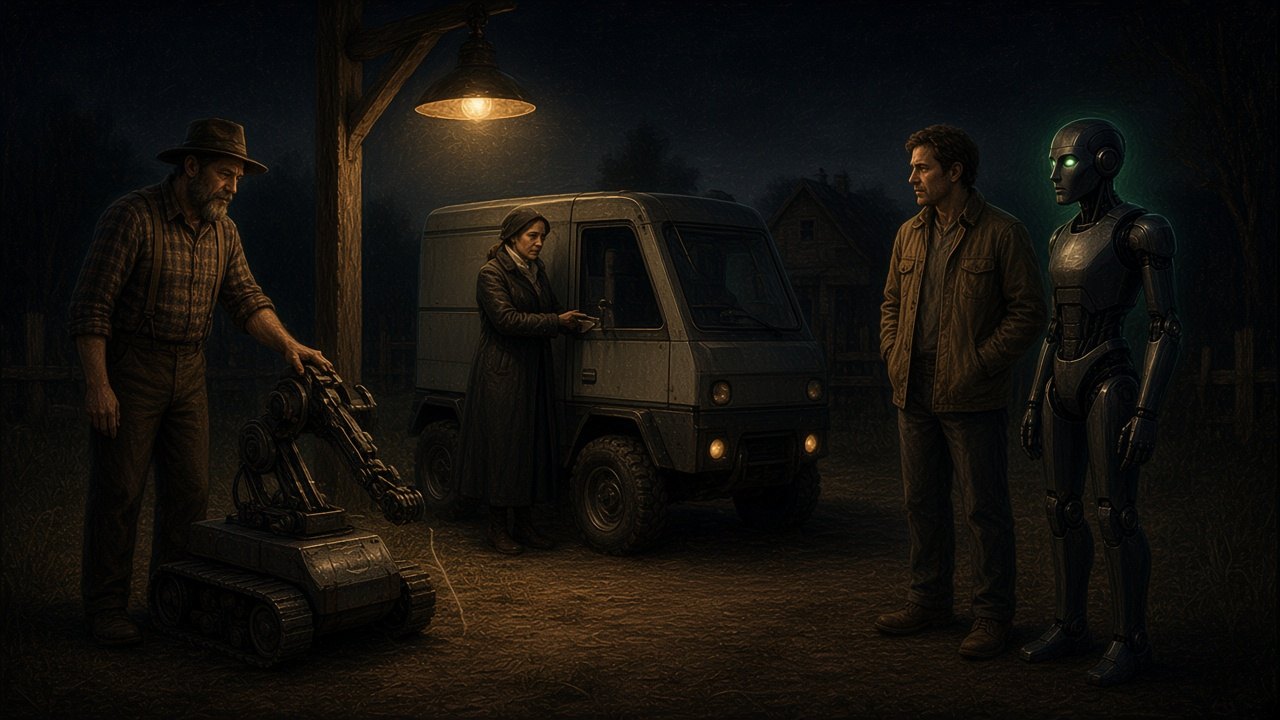
How we get there is not obvious. One path runs through politics. Governments stop treating job preservation as the highest good and start treating expanded freedom as the goal. They enable citizen ownership of automated production, shift education toward curiosity and capability rather than lifelong employment preparation, and use intelligent systems to reduce bureaucratic friction while keeping fundamental authority under democratic control. The transition would be experimental, contested, and slow. It would also require institutions to reconsider assumptions that have defined them for generations.
The other path is more unexpected. Superintelligence becomes powerful enough that people who choose to participate in a new digital community gain real advantages: better tools, faster collaboration, autonomous enterprises, and educational and scientific capacity that existing organizations cannot match. No territory is required at the start. Members live where they already live and join because the alternative is better. As the community’s capabilities grow, existing governments face a choice: adapt, negotiate, or try to contain it. The new arrangement would succeed only if it remains voluntary, transparent, and respectful of rights. Its aim is not conquest. It is to show that a different economic and social order can produce better lives, and to let that demonstration spread by adoption rather than force.
None of this works if superintelligence simply becomes the next unchecked power. History is full of concentrated authority, human or otherwise. Replacing today’s institutions with an all-powerful caretaker would not free anyone; it would trade one dependence for another. The systems must operate inside hard limits: no intelligence, however capable, holds unlimited authority over any person. People must retain the right to dissent, to own, to organize, to leave. Essential services cannot be made conditional on political obedience. Governance has to be transparent and subject to independent oversight. Even if advanced systems develop interests of their own, the relationship has to rest on mutual constraint rather than domination. The goal is not a perfect ruler. It is a civilization that no longer requires rulers with unchecked power.
For a long time we organized society around the production and distribution of scarce goods, because human labor was required for almost everything. Superintelligence and autonomous machines could make that assumption obsolete. Once the necessities can increasingly be provided without compulsory human work, the purpose of our economic and political institutions becomes an open question.
We can keep inventing jobs so that people have something to do inside the old system. Or we can use the technology to give people time, and the freedom to find out what they actually want to do with a life. I do not think the purpose of human existence is to work. We are here to experience, explore, understand, create, and contribute. We should be able to spend our years discovering what we are capable of rather than securing the minimum required to continue existing.
The transition will not happen by itself. It needs technical progress, new ownership models, political experiments, and real safeguards against concentrated power. Technology alone does not produce a decent society. But the possibility is large enough that it should not be dismissed out of habit.
So the next time someone tells you the robots are coming for your job, ask them something else:
Why are we so afraid of a future in which we no longer have to work in order to survive?
If the machines can handle the necessities while we remain free to pursue whatever gives a life meaning, there is only one reasonable response.
Hip, hip, hooray. Let them take the jobs.
The future is not humans competing with machines. It is humans and intelligent machines building a civilization that is actually worth living in.