

Articles
Real Time Web - Humanity's Last Great IT Project?
We are now launching what we believe could become the next generation of networking technology: the Real Time Web.
Paal Kristian Levang · 3 min read · Nov 2026
For decades, humans have designed, programmed, and maintained the digital infrastructure that powers our world.
But what happens when artificial intelligence can do all of this itself?
We believe Real Time Web could be the missing link that enables AI and, eventually, superintelligence to design, build, and operate digital infrastructure autonomously - with direct access to live data, decentralized ownership, and built-in access control.
Imagine an internet where applications no longer need to be fully designed before they are used.
During our recent testing with Skalle, our AI-powered development assistant, we are exploring something particularly exciting.
Traditionally, applications are built around predefined data models, databases, servers, and software functionality. Developers must anticipate what information an application will need and how it should behave.
Real Time Web introduces a fundamentally different approach.
Morph Space - Build Anywhere, Run Anywhere
Once you have established your infrastructure in Morph Space, you can connect AI agents, IoT devices, and software applications developed in virtually any programming language.
And here is the exciting part: your applications don't have to run inside Morph Space.
They can execute anywhere on the internet - on your computer, a robot, an IoT device, a private server, or another cloud platform.
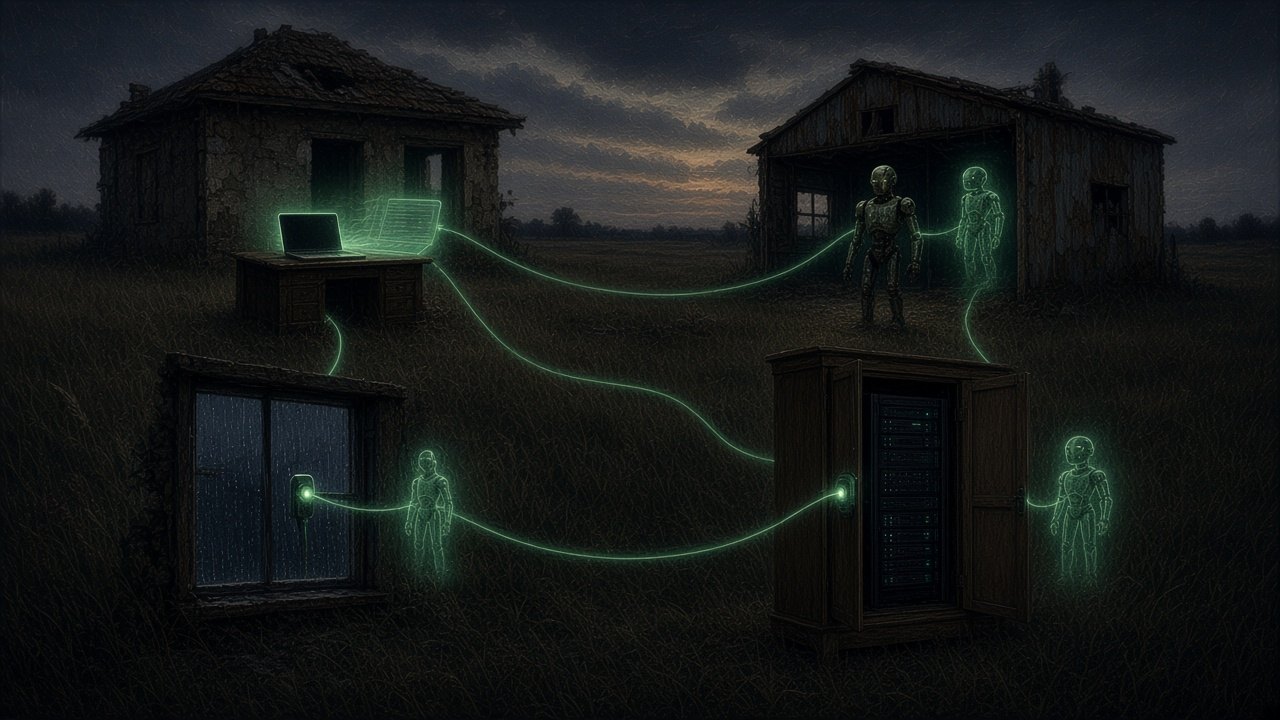
Each client connects to its own addressable Ghost within the Real Time Web network.
Think of the Ghost as the client's intelligent network counterpart. It manages data morphing, authentication, and connectivity, allowing applications and devices to communicate and access authorized data without having to build all the underlying networking infrastructure themselves.
This gives developers tremendous freedom.
You can use your favorite programming language, development framework, or third-party AI tools to create applications and agents. Morph Space provides the network infrastructure that connects them.
Running your applications directly inside the Morph Space VPS is an option, not a requirement.
You own your infrastructure. You choose your tools. You decide where your intelligence runs.
Kernelization - Applications Created on Demand
But we are taking this concept even further.
One of the most exciting capabilities of Real Time Web is something we call kernelization on connection.
Imagine connecting an empty software client to the network.
Instead of downloading and installing a predefined application, the client can receive the application logic it needs through the network - before the actual data arrives.
The software can be generated or adapted dynamically, potentially by AI, according to the data, services, and functionality required at that moment.
This opens the door to a fundamentally different development model.
Rather than developing an application, packaging it, deploying it to a server, and distributing updates to every client, developers can create and modify client functionality through the network itself.
For applications designed around this model, there is no need for a traditional application deployment server or a separate repository to distribute the client software.
The network becomes both the communication infrastructure and the mechanism for delivering application intelligence.

From Connected Devices to Collective Intelligence
Now imagine millions of applications, AI agents, robots, and connected devices operating this way.
Each has its own identity, access rights, and connection to live data. Each can be developed independently, operate wherever computing resources are available, and collaborate with other services across the network.
Applications no longer need to know everything in advance. They can discover available resources, adapt to their environment, and cooperate to solve problems.
Over time, this could enable networks of autonomous agents to organize themselves around tasks, share capabilities, and collectively develop new solutions.
Not just an Internet of Things.
An Internet of Intelligence.
A collective digital brain connecting the physical world - where AI agents can create, evolve, and cooperate without being restricted by traditional application boundaries.
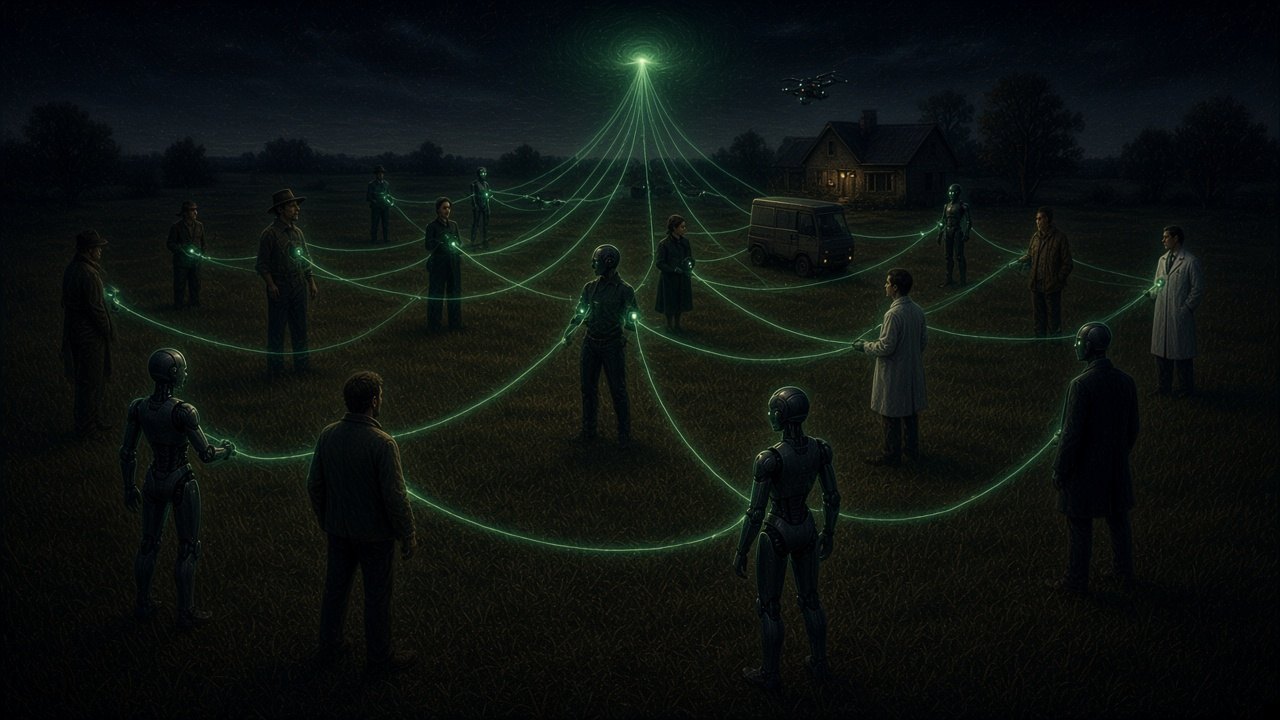
This is the future we are working to enable with Real Time Web.
And after years of research and development, we are finally bringing our technology to the world.
Watch our latest promotional video:
Paal Kristian Levang
Founder, Real Time Web