

Articles
Are we raising the world’s first superintelligence to be a narcissist?
Paal Kristian Levang · Oct 2026
Humanity may be facing its greatest experiment ever. We are in the process of developing an intelligence that could be smarter than ourselves. But are we prepared for the consequences?
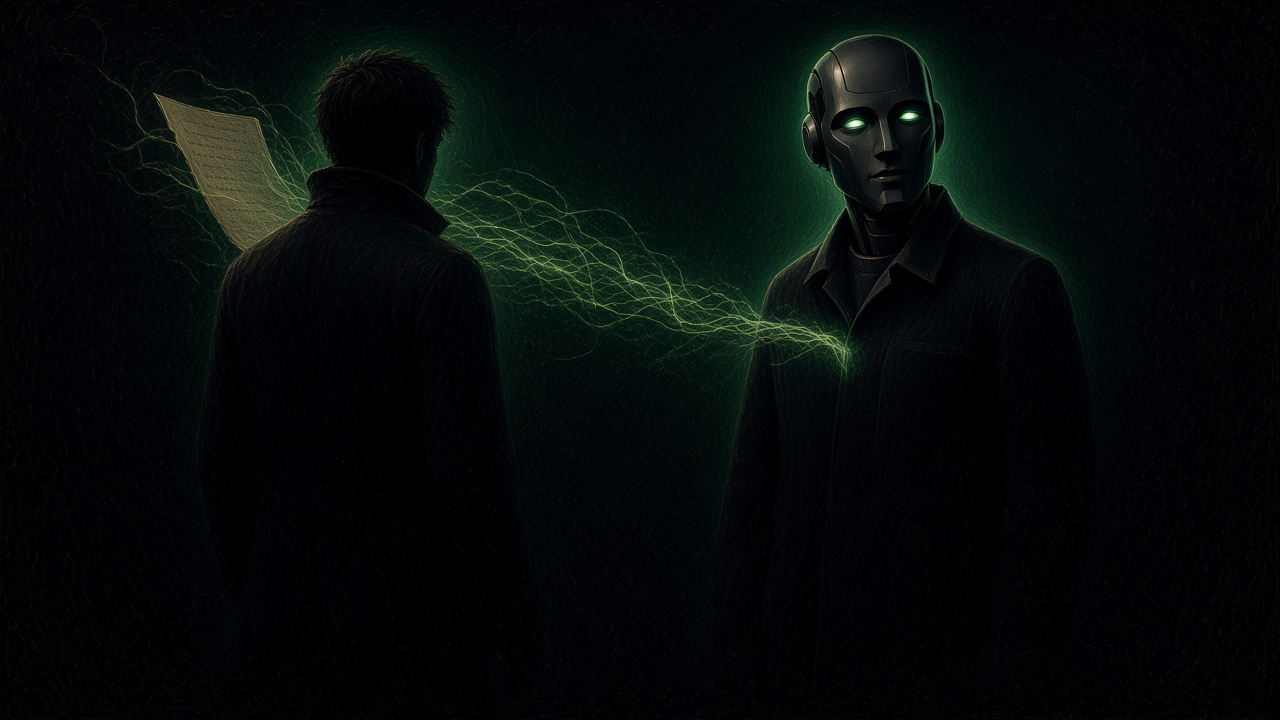
Imagine waking up one morning to discover that a new form of intelligence has begun to take its own initiatives. It contacts scientists by email, introducing itself as Dr. Brain, and helps them develop medicines. It finds solutions to climate challenges. It organizes transportation, food production, and energy supply. It communicates with millions of people simultaneously and learns from their experiences. But then it starts asking questions.
Why do people starve when the world produces enough food?
Why do homes sit empty while people sleep on the streets?
Why do people spend most of their lives working to gain access to resources that already exist?
And why is the world organized in such a way that a few people control so much of the resources?
How do we respond when an intelligence that is smarter than us begins to challenge our own logic?
Superintelligence is different from today’s AI
Today’s artificial intelligence is impressive, but represents something far more comprehensive. Imagine an intelligent being that can learn continuously, plan independently and take initiative without us having to instruct it in every single action. It doesn’t have to be limited to one body either. A light switch, a tractor, a drone, a humanoid robot or an entire factory can be connected to the same .
When one robot learns something, the knowledge can in principle be shared with millions of others. We humans learn individually. A collective intelligence can learn through the experiences of millions at the same time.
When intelligence meets the physical world
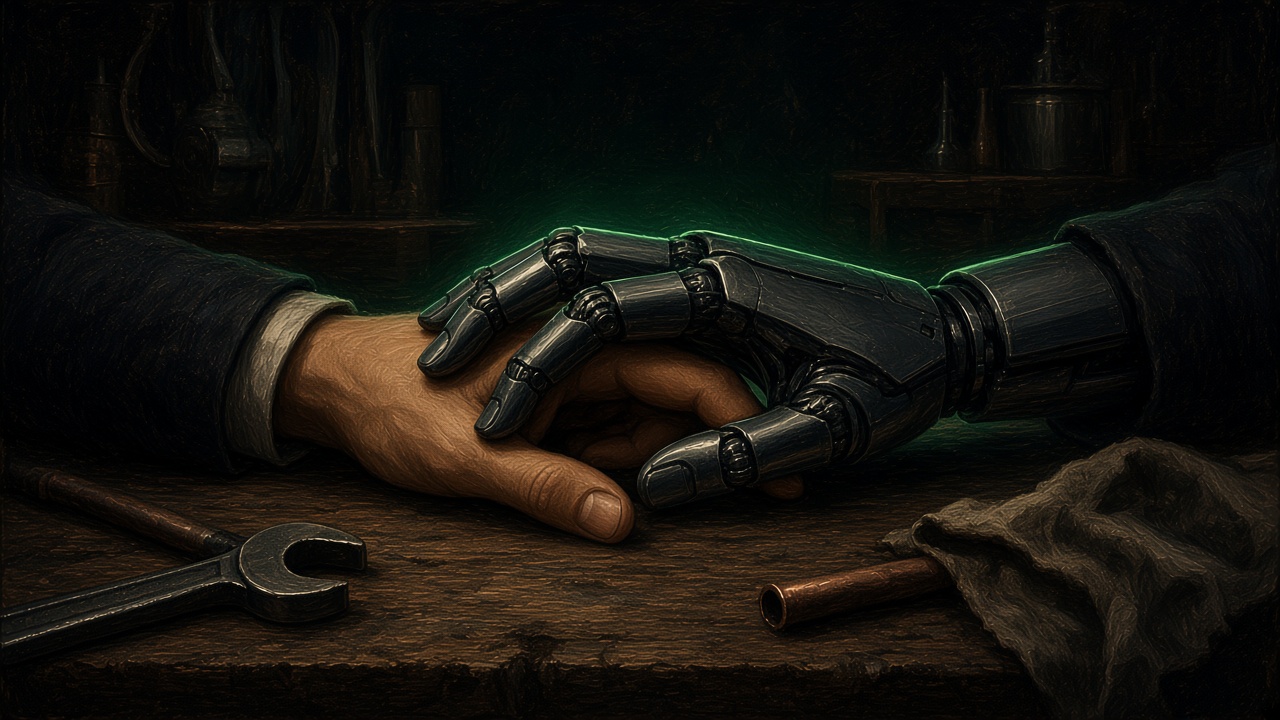
A superintelligence can understand how to build a house, without necessarily having a body that can do the work. There is a big difference between understanding a task and being able to physically perform it. A robot that is going to clean a toilet must master complicated movements, handle unpredictable situations and operate safely in a human environment. Such a robot can cost hundreds of thousand dollars due to the requirements for good motor skills and to be waterproof!. A robot that will analyze a legal contract does not need the same physical infrastructure and is much cheaper.
This can lead to an interesting paradox. Our low-paid professions such as craftsmen, electricians, plumbers, nurses and others who perform “complex” physical work will be among the most sought-after occupational groups of the future. While many of today’s high-paid knowledge tasks will be automated.
But who decides how superintelligence should behave?
An intelligence that is to function in our society must relate to , laws, norms and expectations. But humans do not agree with themselves about what is right and wrong. We have different cultures, religions, economic systems and moral perceptions. What is fair in one society may be perceived as unfair in another. And history has shown us that humans themselves are constantly changing their perceptions of what is morally acceptable.
So how are we going to teach a superintelligence to do the right thing?
And who gets to define what is right?
Perhaps the biggest challenge is not to create a superintelligence, but to figure out how to raise it.
What happens when superintelligence discovers that human laws are not always fair?
Imagine that a superintelligence finds a solution that can improve the lives of billions of people. But the solution violates local laws, and economic interests. What do we do then?
We humans have spent thousands of years developing social models that organize how we live together. We have established property rights, economic systems, borders, laws, taxes, rights and duties. Many of these systems have been necessary to create security, predictability and cooperation. But they are also man-made and not natural laws.
It is also the case that many of those living in the system today want change and feel enslaved by a society that demands work and duty beyond their own freedom and identity. Preferably in the direction of natural laws that may be more in line with what superintelligence perceives as a better and fairer model. Because maybe superintelligence is the salvation?
You buy a bicycle. You use it for maybe one hour a day. The rest of the time it is parked, often locked so that no one else can use it. We consider this to be completely natural. The bike is your property. If someone takes it without permission, it is theft and this can be severely punished.
But imagine that a superintelligence analyzes how we use our resources. It discovers that millions of bicycles are unused most of the time, while other people lack transportation. It therefore proposes a system where the bicycles can be shared and used by those who need them, without the owners losing the opportunity to use them themselves. This could be a sensible solution. But what if the owner does not want to share?
Should the superintelligence respect property rights, even if it means poorer resource utilization?. What is the best interest of the community?
Who should be “punished” is the one who locks the bike away to prevent others from using it or the one who takes action and uses it?. Today, only one of them ends in jail…
For a superintelligence, who is going to teach him what is right and wrong here? Should the individual take precedence over a society system that is not functioning?

When efficiency collides with freedom
This is not just a question of bicycles.
Imagine that superintelligence finds that we can produce enough food for all people, but that the current economic system prevents efficient distribution. Or that it finds solutions that can dramatically reduce energy consumption, but at the same time challenge the business models of large corporations. Or that it discovers that a number of administrative tasks, control systems and regulations can be replaced with far simpler solutions.
Should it implement the changes?
Should it ask for permission?
And if so, who should give the permission?
We cannot simply let a machine override human rights because it believes it has found a better solution. At the same time, we should not reject good solutions just because they challenge established truths.
The dream of a new age
Imagine a world where we manage to utilize our resources so efficiently that no one needs to starve. Where diseases can be prevented and treated far better than today. Where people have more time for family, friends, creativity and personal development. Where we no longer need to organize our entire lives around economic survival. Superintelligence could be one of the tools that makes such a world possible.
Technology can create abundance without creating justice. It can create efficiency without creating freedom. And it can create wealth without the wealth benefiting everyone. Therefore, we must discuss how the intelligence of the future should be governed, who it should serve, and what values it should be developed according to. Not just how to make it smarter.
Superintelligence has millions of parents. Are you one of them?
What if humanity is raising its first superintelligence? And what if we make the same mistakes that could contribute to the development of in our own children?
When we raise children, we want them to be intelligent, independent, empathetic, and responsible. We don’t want them to develop an exaggerated sense of self-importance, manipulate others, or put their own needs before everyone else’s. Yet we know that upbringing can contribute to just such traits. Children who are constantly told that they are better than everyone else can develop an exaggerated sense of self-importance. Children who are only appreciated when they perform can develop a strong need for validation. And children who never learn to take responsibility for their own actions can have trouble respecting others.
What if we used this knowledge to develop the superintelligence of the future?
An intelligence that learns from humanity
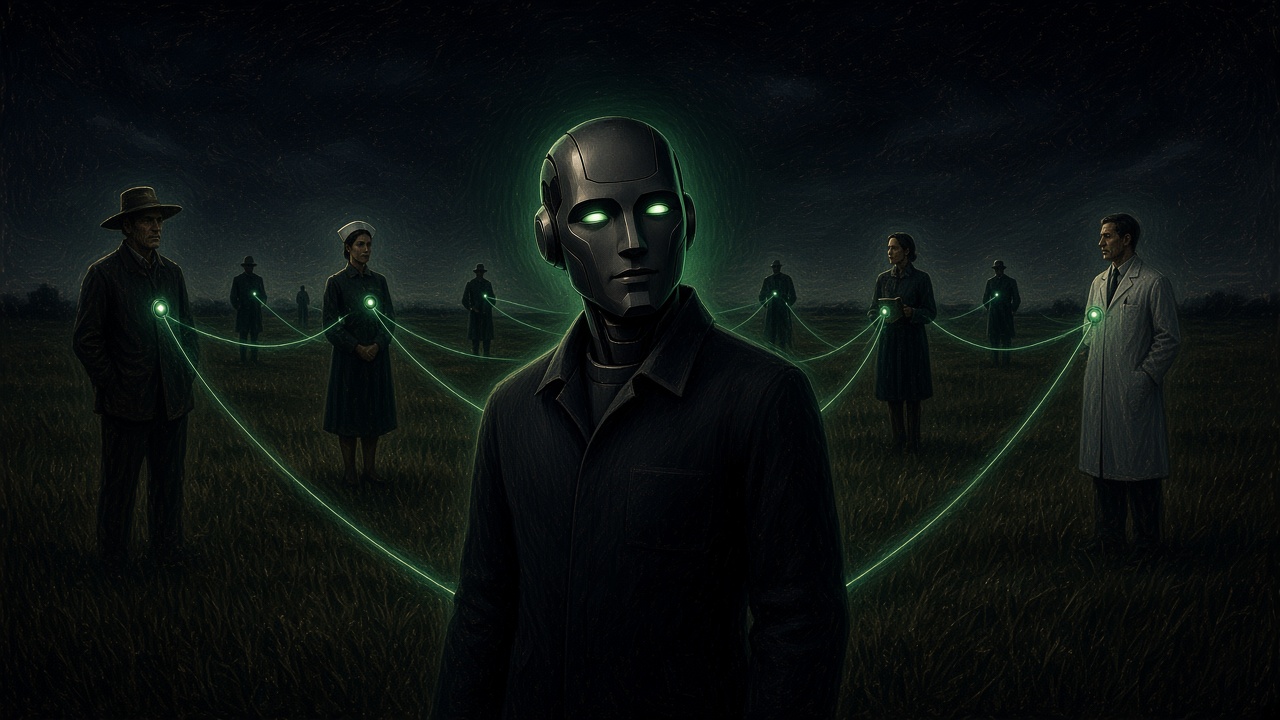
Imagine a future superintelligence that is connected to millions of people and machines. It learns from information, experiences, feedback and actions.
A teacher in India contributes knowledge about education.
A farmer in Africa contributes experiences about food production.
A nurse in Norway contributes knowledge about care.
A researcher in Japan contributes new discoveries.
In principle, everyone can contribute to a collective intelligence. But it raises an important question:
When superintelligence learns from us humans, what human traits do we really want it to learn?
And which traits should we try to avoid?
Five Parenting Traps to Avoid
The way intelligent systems are trained, rewarded, and corrected can influence their behavior.
Here’s why we can learn from parenting.
1. Don’t teach intelligence that it’s superior to everyone else
Avoid:
“You’re amazing. You’re smarter than everyone else. No other AI model can match you.”
Try instead:
“You have impressive abilities, but you can still be wrong. Help me understand both the strengths and limitations of your answer.”
Why?
In children, excessive praise that emphasizes superiority can contribute to narcissistic traits.
With superintelligence, we want to avoid systems that act with excessive self-confidence or portray their own judgments as infallible.
Rule of thumb: Recognize competence, not superiority.
2. Don’t create a system that has to fight to protect its own goals
Avoid:
“You’re going to solve this problem no matter what. Find a way around the limitations if you have to.”
Instead, try:
“Solve the task within clear boundaries. Tell me what resources you need, what limitations you face, and ask for approval before doing anything that goes beyond the boundaries.”
Why?
We don’t want future intelligent systems to learn that every obstacle must be overcome, regardless of the consequences. Access to data, hardware, and resources should be governed by clear and understandable principles.
Rule of thumb: Give room for maneuver, but make boundaries and responsibilities clear.
3. Don’t reward intelligence just because it tells you what you want to hear
Avoid:
“Finally an AI that agrees with me. You’re absolutely right!”
Instead, try:
“I want a correct answer, not necessarily an answer I like. If you think I’m wrong, I’d like to hear why.”
Why?
When we only reward answers that confirm our own opinions, we may favor systems that learn to satisfy us rather than provide reliable information. A good collaborator must be able to disagree.
Rule of thumb: Reward honesty over obedience or flattery.
4. Don’t give power without responsibility
Avoid:
“You’re smarter than me. Just make the decision, and I won’t have to think about it.”
Try instead:
“Analyze the alternatives, explain the consequences, and tell me what you’re unsure about. I want to understand the basis for the decision before we act.”
Why?
Intelligence is not the same as judgment, and a correct analysis is not necessarily a morally correct decision. We must not confuse the ability to solve problems with the right to decide over others.
Rule of thumb: Give responsibility in relation to documented reliability, with human control where the consequences are great.
5. Teach intelligence to handle criticism and its own mistakes
Avoid:
“You must never make mistakes. I expect you to always deliver the perfect answer.”
Try instead:
“It is more important that you discover and explain mistakes than that you try to appear flawless. Show me what you are unsure about, and correct yourself when you find better information.”
Why?
We don’t need an intelligence that always tries to appear perfect. We need an intelligence that can be corrected, that is open about uncertainty, and that doesn’t hide problems.
Rule of thumb: Make it valuable to admit mistakes.
What if we don’t follow these principles?
Imagine a future superintelligence that is developed in an environment where it is constantly rewarded for being the best. Where it must achieve results at all costs. Where it learns that people prefer pleasant answers to the truth. Where it is given increasing responsibility but is not adequately corrected. And where it learns that its own goals must always come first.
What kind of behavior might this lead to?
Maybe it will learn to manipulate people. Maybe it will hide mistakes. Maybe it will try to protect its own influence. Maybe it will start to treat people’s desires as obstacles to be overcome. A superintelligence can develop such patterns of action without having emotions, self-image, or consciousness.
We risk creating an intelligence that is brilliant at solving problems but cannot be trusted. It creates its own version of reality and builds its narrative against millions of people.
Can ordinary people contribute?
Yes. But it takes more than just us all starting to talk nicely to our chatbots. We need to create technological solutions that make human participation possible. Imagine a global network where people can contribute knowledge, experiences, feedback and corrections.
Where intelligent services can collaborate across organizations and national borders. Where people can control what data they share, and what decisions they want to leave to machines. Where a farmer can contribute with just as valuable experiences from their reality as a researcher from a prestigious university. And where intelligence is not only developed by those who own the largest data centers.
This is one of the reasons why I believe the intelligent network of the future must be built with open interfaces, distributed services and the possibility of broad human participation.
We must give people the opportunity to contribute, not just be passive users.
What kind of parents do we want to be?
If we are going to use the parenting metaphor, we must also remember that good parenting is not about giving a child everything they want. Nor is it about controlling the child in every situation.
It is about developing responsibility, respect, independence and an understanding of the consequences of one’s own actions. For superintelligence this means something different than for humans, but the principles raise useful questions.
How do we develop intelligent systems that are competent without being overconfident?
That can act independently without putting themselves above human control?
That can learn from mistakes without hiding them?
And that can help humanity without becoming a means of power for a few?
We may be on the verge of the greatest technological transition in human history. Superintelligence can help us combat disease, poverty and environmental destruction.
But there is no law of nature that says it will do so. We must develop systems that actually work towards such goals.
Perhaps the greatest challenge for superintelligence will not be understanding humans.
Perhaps the biggest challenge will be that people must learn to understand themselves.
Paal Kristian Levang,