

Articles
Friend or foe? The choice is still ours
Thiru · 10 min read · Oct 2026
We keep hearing the same thing everywhere. AI is going to replace software engineers. AI is going to write the code. AI is going to take the jobs. Let me ask you something else. Have you looked at the other side of the story?
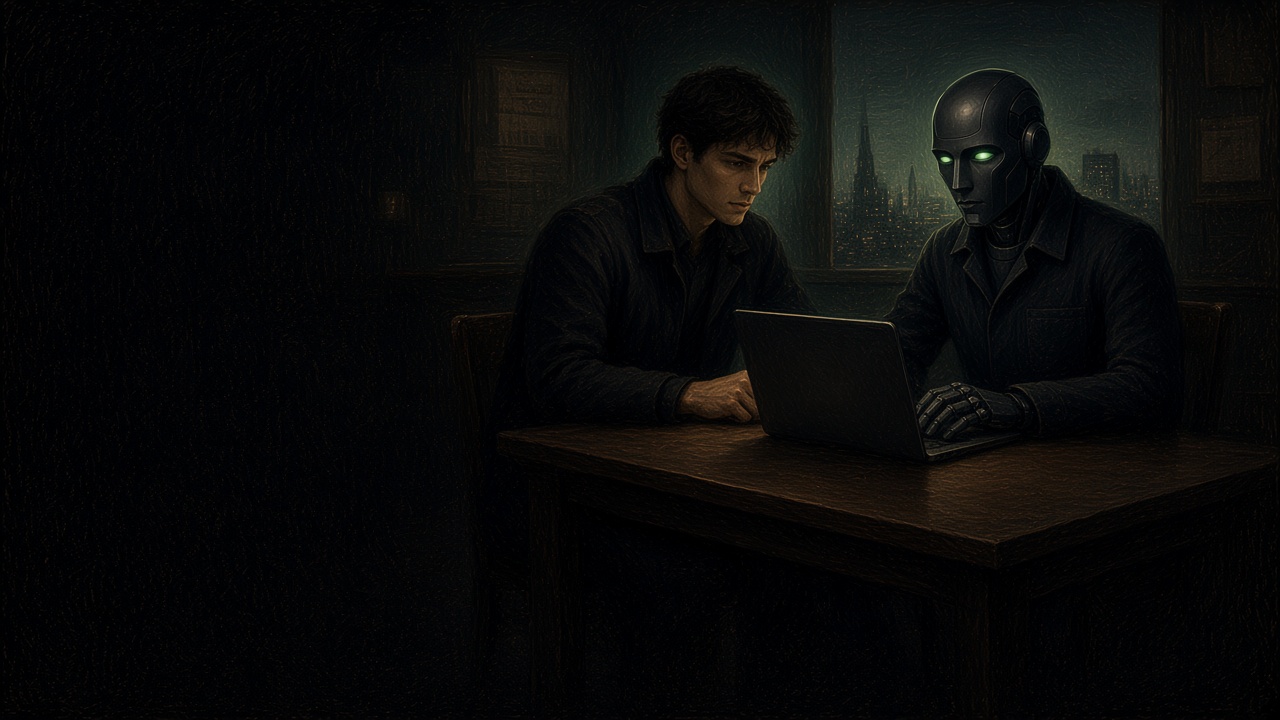
In college I watched people use AI to get through online assessments, and through interviews. Tools like Cluely made it easier to sit in an interview with a machine helping in real time. I would not call every one of them an engineer. There is something about that situation we rarely say out loud.
Getting into a company by cheating is questionable. The fact that someone found a way to do it raises another question: why was it possible in the first place? AI gave people an advantage they did not have. People who could not solve a problem on their own could suddenly solve it with help. People who were not confident enough to attend an interview could suddenly perform. I am not saying that is right. I am saying the rules of the work have already moved.
So how can we say AI is only taking jobs, when it is also helping people reach jobs they might never have landed?
Today, people who can code and people who cannot are both building products, launching startups, and finding openings that were closed a few years ago. Not everyone will benefit equally, and some jobs will disappear. AI is also opening kinds of work that did not exist. Suddenly a lot of people want to build AI products, AI agents, and the infrastructure that makes them run.
Maybe we should stop treating this as a war between humans and AI. Instead of spending all our time arguing about whether AI will replace us, we could learn how to use it.
Get a job. Build your skills. If a tool genuinely helps you work better, put a small part of your salary into it. Companies hire you to solve problems, and now you have another worker sitting beside you. The job is becoming less about writing every line yourself, and more about understanding what needs to be built, listening to the people who need it, asking the right questions, and saying those questions clearly to a machine.
You need to become a good listener, so you can understand people, and a good communicator, so you can work with machines. Maybe that is what being an engineer will increasingly mean.
Companions we did not expect
We usually imagine robots in factories, carrying heavy things, or repeating the same task. What if their most important role turns out to be something much more personal?
Think about how many people are lonely. Some find it hard to socialise, to speak in public, or even to start a conversation. Imagine a robot that can listen without judging you, help you practise a conversation, and keep you company when nobody else is around.
For some people, talking to a robot may feel much easier than talking to another human. It could become a way to build confidence, learn social skills, or simply feel less alone. Robots could also help older people, assist people with disabilities, and support those who need help with ordinary daily tasks.
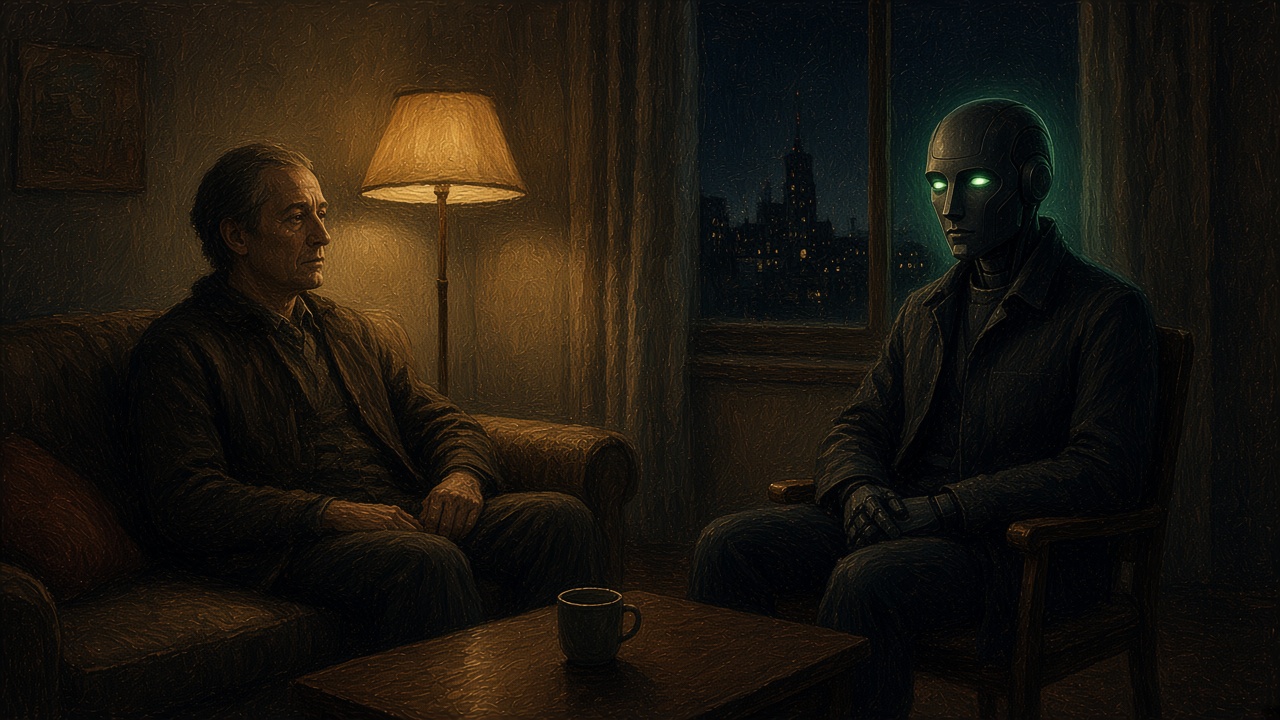
There is another side. What happens when we get too comfortable with machines? What happens when we stop exercising because robots do the physical work, or when we start to prefer artificial company over a real relationship?
Convenience always comes with a trade-off. A robot can help you live independently, and it can also make you dependent. It can help you feel connected, and it can make a human relationship feel unnecessarily hard.
Then there is health. If robots perform our physical tasks and AI takes the mental workload, will we eventually stop challenging ourselves? Future generations may have to work harder to keep the physical and social abilities we treat as given.
The technology itself is not automatically good or bad. It depends on how we choose to use it. The same robot could be a life-changing companion for one person, and a reason for another person to withdraw from the world.
Rebuilding reality from scratch
I have always been a huge fan of science fiction. One idea that stays with me is a future where the real world becomes difficult to live in, because of environmental disaster, war, or infrastructure that has collapsed.
Imagine having to rebuild an entire city from scratch. You would need roads, buildings, electricity, transport, communication, and countless other things. That takes enormous time, money, and human effort.
Now compare that with building a virtual world.
We already have AI systems that can generate code, create digital assets, and help people build complex software much faster than before. As those abilities improve, realistic virtual environments could become much easier to make. Imagine putting on a headset, entering a digital city, and experiencing another world without physically travelling anywhere.
What if, instead of spending decades rebuilding certain experiences in the physical world, we could recreate them digitally in a fraction of the time? What if people could work, learn, meet, explore, and build businesses inside these environments?
A virtual world cannot replace everything. You still need food, clean water, physical infrastructure, and a healthy body. You cannot survive on pixels alone. Virtual environments could still become important for education, entertainment, collaboration, and even scientific research.
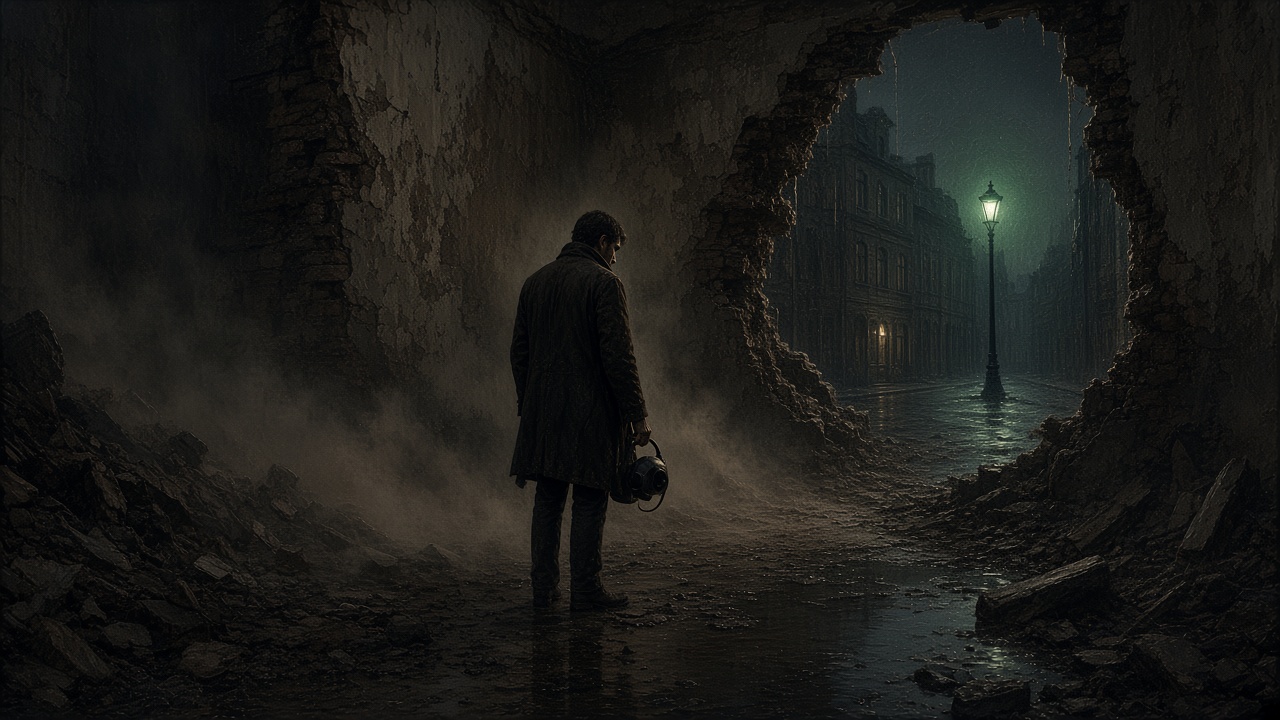
Which brings another possibility. What if the future is not a choice between the physical world and the digital one, but a connection so close that the distinction starts to matter less?
We already have early , virtual reality, and systems that connect digital information with physical experience. These technologies are still limited, but they show a little of what might become possible.
Perhaps one day people will spend part of their lives in physical places, and another part in digital worlds that feel almost indistinguishable from reality.
There is a question we should ask before getting too excited. If we can build a world that feels better than the real one, will we still have the motivation to improve the real one?
The next version of humanity?
What happens when technology does not only assist a human, but becomes part of the body?
Today we already have , pacemakers, cochlear implants, and early . These can restore abilities, improve a life, and help people do things that once seemed impossible.
Now imagine these technologies moving past the work of restoring something that was lost.
What if a person could use a to work with a computer directly? What if an advanced prosthetic arm became stronger, or more precise, than a biological one? What if a future implant helped someone past a physical limit, or let them communicate with a machine without speaking a word?
At that point, the line between human and machine becomes much harder to draw.
This is where it gets controversial. Imagine a future government introducing a programme that encourages, or even requires, citizens to receive certain implants, in the name of national security, productivity, or public safety. Imagine companies selling enhancements that improve memory, physical strength, or other abilities, at prices only the wealthiest people can afford.
Suddenly, humanity could be divided into those who can afford a technological upgrade and those who cannot.
Would an enhanced person have an unfair advantage over someone who chooses to remain entirely biological? Would employers start preferring candidates with technological enhancements? And if these upgrades became necessary in order to compete, would they still be a choice?
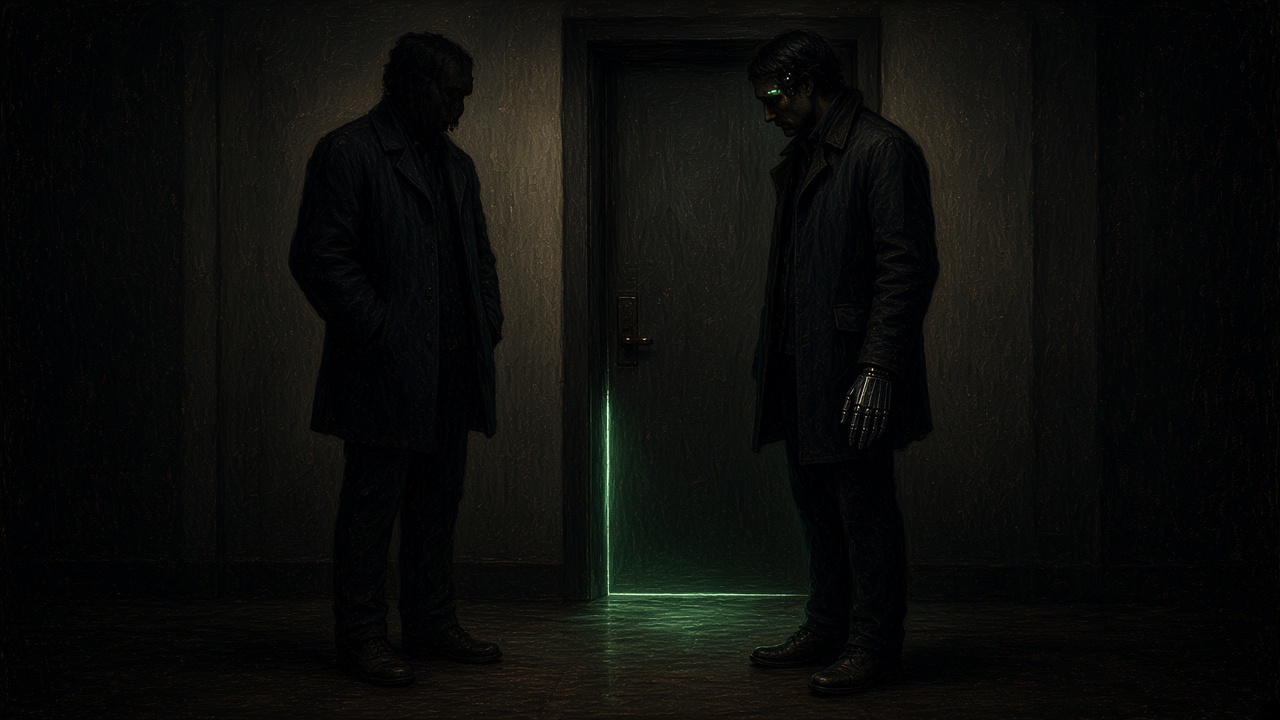
Perhaps, after several generations, these technologies become cheaper and more ordinary. What begins as an expensive privilege could eventually become as common as owning a phone. That is one possible future. Nobody can say how it will actually unfold.
Then there is space.
We have always looked at the stars and wondered whether we are alone. If humanity eventually meets life with technology far beyond our own, we may need more than the machines we have, in order to explore, survive, or communicate in an unfamiliar place.
Robots could operate where humans cannot survive. AI could help us understand unfamiliar systems. Human-machine interfaces could help astronauts control equipment more effectively. Advanced prosthetics and medicine might also help humans adapt to conditions beyond Earth.
We often imagine aliens as future enemies. We do not even know whether extraterrestrial life exists, let alone what it would be like. The nearer challenge may simply be surviving the journey, and learning how to exist away from our home planet.
Maybe the future human will not be entirely biological, and not entirely mechanical. Maybe we become something in between.
The bigger question is whether we make these decisions carefully, or allow technology, companies, and governments to make them for us.
Who controls the future?
There is one more thing we have not discussed enough. Who actually controls all of this technology?
We talk about AI becoming smarter, robots becoming stronger, and humans becoming enhanced. Intelligence and power are not the same thing. The person who builds a technology does not always control how it is used, and the person who controls it does not always have the best intentions.
Imagine a world where a handful of companies own the most advanced AI systems, the robots that perform essential work, and the infrastructure that connects everything. What happens when millions of people depend on these systems for their jobs, their health, their education, and their daily lives?
Would we be living in a more advanced society, or would we simply have exchanged one kind of dependency for another?
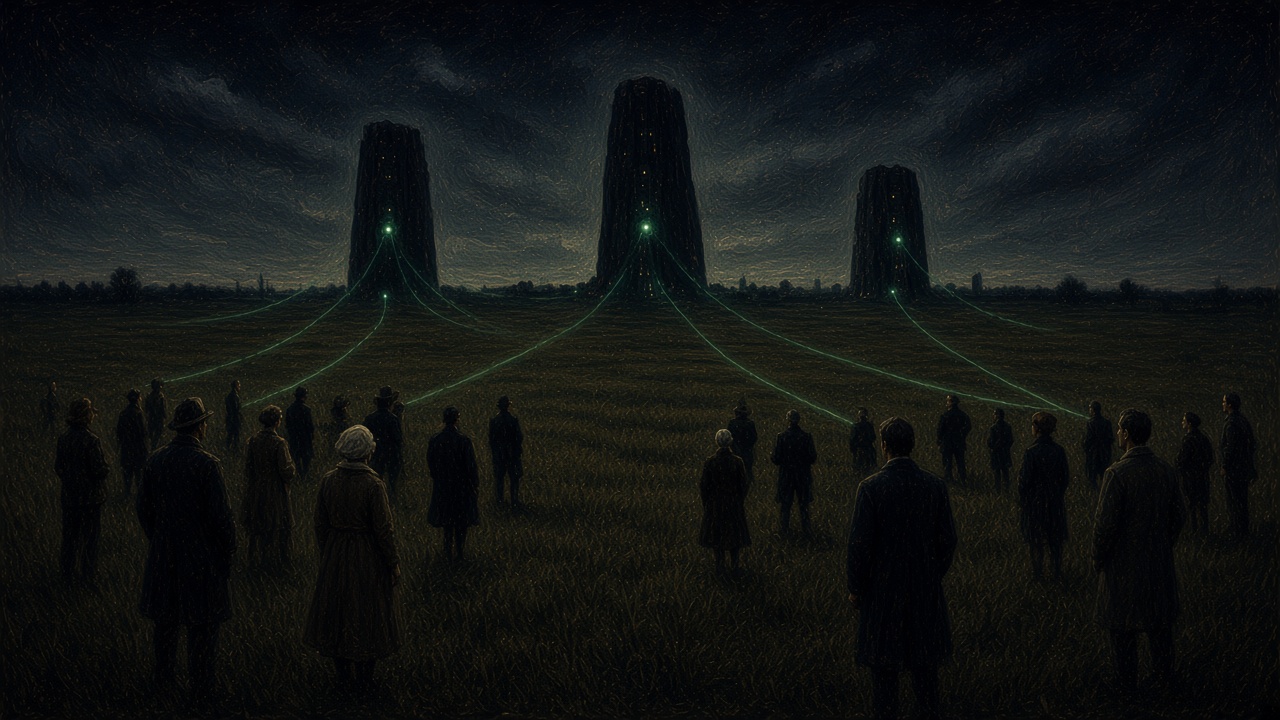
The same technology that helps a small team build a very large company can also give enormous power to the people who control the infrastructure behind it. AI could make knowledge more accessible, and it could also concentrate wealth and influence in a few hands.
That is why the future of AI is not only a technical problem. It is also a question of ownership, access, responsibility, and freedom.
We need to think about who gets to use these technologies, who benefits from them, and who is accountable when something goes wrong. If machines become essential to society, then the systems governing those machines become just as important as the machines themselves.
Maybe the biggest challenge will not be building a . Maybe it will be making sure humanity can live with one without losing control of its own future.
The choice is still ours
Every major technological change has altered the way humans live. Electricity changed our cities. Computers changed our work. The internet changed how we communicate. Now AI is beginning to change how we think, how we build, and how we meet the world.
And just like every technology before it, AI comes with both opportunities and risks.
It can help people learn faster, build businesses, discover medicines, and solve problems that once seemed impossible. It can also displace workers, spread misinformation, increase inequality, and create new forms of dependency.
Robots could give people more independence, or they could make us less active. Virtual worlds could open new experiences, or they could encourage us to leave reality. Human enhancements could restore abilities, or they could create a society where access to technology decides a person's opportunities.
The future is not going to be decided by AI alone. It will be shaped by the people who build it, the companies that deploy it, the governments that regulate it, and the choices we make as individuals.
So, is AI a friend or a foe?
Maybe that is the wrong question.
A technology does not need to be entirely good or entirely bad. The same tool can help one person and harm another. What matters is whether we understand what we are building, and whether we take responsibility for how we use it.
We might eventually build robots that look like us, machines that think faster than us, and digital worlds that feel more real than reality itself. We might even change our own bodies to survive in environments that humans were never designed for.
Through all of that, one question remains. Are we building technology to make humanity better, or are we changing humanity simply because we can?
The answer is still ours to decide.
Thiru,